 Login

Workplace Health and Safety Awareness
- Christinne van Vuuren |
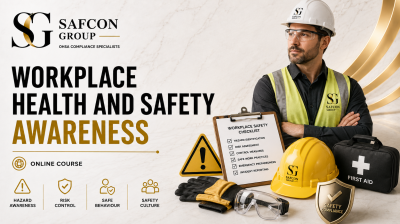
The Workplace Health and Safety Awareness Course is a professionally developed online programme designed to provide learners with a practical foundation in occupational health and safety.
Every workplace contains hazards that may cause injury, occupational illness, property damage, operational disruption or harm to people. Many workplace incidents can be prevented when employees understand the hazards associated with their work, follow the required safety procedures and report unsafe conditions before harm occurs.
This course introduces learners to the essential principles of workplace health and safety. It explains why workplace safety is important, how hazards and risks arise, how risks can be controlled and how every person can contribute towards a safer and healthier working environment.
The programme covers the general responsibilities of employers, supervisors and employees, together with practical guidance on hazard identification, risk control, housekeeping, slips and falls, manual handling, machinery, electrical safety, hazardous substances, fire awareness, personal protective equipment, incident reporting and emergency procedures.
The course also emphasises the importance of positive safety behaviour. Learners are encouraged to recognise unsafe acts and conditions, avoid dangerous shortcuts, report concerns promptly and take reasonable care of themselves and other people who may be affected by their actions.
The learning content is presented in a clear and practical format and includes workplace examples that may apply across a wide range of industries, including offices, retail environments, warehouses, workshops, factories, farms, hospitality establishments and construction-related workplaces.
No previous occupational health and safety qualification or experience is required.
Although the course is offered free of charge, it has been developed and presented as a premium SAFCON Group Training Academy programme. Learners are expected to complete all required course content and successfully complete the final online knowledge assessment before receiving a Certificate of Completion.
Course Delivery
The course is:
- completed entirely online;
- self-paced;
- accessible from a computer, tablet or compatible mobile device;
- supported by practical workplace examples;
- followed by a final online knowledge assessment; and
- completed with a digital Certificate of Completion.
Important Course Limitation
This is a general workplace health and safety awareness course.
It does not replace workplace-specific induction, task-specific instruction, practical competency training, accredited training or any training required for a particular statutory appointment, occupation, workplace risk or item of equipment.
Completion of this course does not authorise a learner to operate machinery, perform hazardous work, conduct formal risk assessments, provide first aid, fight fires or accept a statutory health and safety appointment unless the learner has completed the separate training and competency requirements applicable to that function.
Course Information
Course Objectives
Course Objectives
The purpose of the Workplace Health and Safety Awareness Course is to provide learners with a practical understanding of the basic principles that support a safe and healthy working environment.
The course aims to improve general workplace safety awareness and help learners understand how their actions, decisions and behaviour can either reduce or increase workplace risk.
By the end of this course, learners should have a clearer understanding of workplace hazards, employee responsibilities, risk-control measures, incident reporting and emergency awareness.
On successful completion of the course, the learner should be able to:
- Explain the meaning and purpose of workplace health and safety.
- Describe why the prevention of workplace injuries, occupational illnesses and incidents is important.
- Explain the general health and safety responsibilities of employers, supervisors and employees.
- Distinguish between a workplace hazard and a workplace risk.
- Identify common physical, chemical, biological, ergonomic, electrical, mechanical and organisational hazards.
- Recognise examples of unsafe acts and unsafe conditions.
- Explain the basic principles of hazard identification and risk control.
- Describe the hierarchy of controls and the preferred order in which risk-control measures should be considered.
- Explain the role and limitations of personal protective equipment.
- Apply basic safety principles to common workplace activities, including housekeeping, manual handling, machinery, electrical work, chemical use and fire prevention.
- Explain the difference between an incident, accident, near miss and occupational illness.
- Describe why hazards, defects, incidents and near misses must be reported promptly.
- Identify the basic actions an employee should take after discovering an unsafe condition.
- Explain the importance of workplace emergency plans, alarms, evacuation routes and assembly points.
- Describe appropriate employee behaviour during a workplace emergency.
- Explain the meaning of a positive workplace safety culture.
- Identify behaviours that support or weaken workplace health and safety.
- Demonstrate a personal commitment to taking reasonable care of their own safety and the safety of others.
Broader Course Aim
The broader aim of this course is to encourage learners to:
- think before acting;
- recognise hazards before harm occurs;
- avoid unsafe shortcuts;
- ask for guidance when uncertain;
- report concerns promptly;
- cooperate with workplace safety requirements; and
- contribute positively to a safer workplace.
Important Note
Completion of this course provides general workplace health and safety awareness only.
It does not qualify or appoint the learner as a safety officer, health and safety representative, risk assessor, first aider, firefighter, machinery operator or any other role requiring separate formal training, practical competency or statutory appointment.
Course Topics
Course Topics
The Workplace Health and Safety Awareness Course is divided into eight structured learning modules. Each module develops the learner’s understanding of workplace safety and prepares the learner for the final online assessment.
Module 1: Introduction to Workplace Health and Safety
This module introduces the meaning and purpose of workplace health and safety.
Topics include:
- the meaning of occupational health and safety;
- the difference between workplace health and workplace safety;
- why workplace health and safety matters;
- the human impact of workplace incidents;
- the operational and financial impact of incidents;
- preventing harm before it occurs;
- workplace safety as a shared responsibility;
- the meaning of safety culture;
- positive and negative safety behaviour; and
- complacency and unsafe shortcuts.
Module 2: Workplace Health and Safety Responsibilities
This module explains the general responsibilities of the different people who influence workplace health and safety.
Topics include:
- the South African occupational health and safety framework;
- the employer’s general duty to provide and maintain a safe workplace;
- the employee’s duty to take reasonable care;
- the responsibilities of supervisors and managers;
- following lawful and reasonable safety instructions;
- cooperating with workplace safety measures;
- reporting unsafe or unhealthy conditions;
- using machinery, equipment and protective equipment correctly;
- the importance of workplace consultation; and
- accountability for workplace safety.
Module 3: Understanding Hazards and Risks
This module introduces the fundamental concepts used to identify and understand workplace dangers.
Topics include:
- the meaning of a hazard;
- the meaning of risk;
- the difference between a hazard and a risk;
- people who may be affected by workplace hazards;
- physical hazards;
- chemical hazards;
- biological hazards;
- ergonomic hazards;
- mechanical hazards;
- electrical hazards;
- psychosocial and organisational hazards;
- unsafe acts;
- unsafe conditions;
- how exposure to hazards occurs; and
- basic workplace hazard identification.
Module 4: Controlling Workplace Risks
This module explains how workplace risks should be reduced and controlled.
Topics include:
- the purpose of risk control;
- the hierarchy of controls;
- eliminating hazards;
- substituting hazardous substances, equipment or processes;
- engineering controls;
- isolation and guarding;
- administrative controls;
- safe work procedures;
- warning signs and barriers;
- information, instruction, training and supervision;
- personal protective equipment;
- the limitations of personal protective equipment;
- maintaining control measures; and
- monitoring whether controls remain effective.
Module 5: Everyday Workplace Safety
This module applies safety principles to common activities and conditions found in many workplaces.
Topics include:
- workplace housekeeping;
- safe access and movement;
- slips, trips and falls;
- safe manual handling;
- lifting, carrying, pushing and pulling;
- machinery and equipment safety;
- equipment inspections;
- machine guarding;
- electrical safety;
- damaged cables and electrical equipment;
- hazardous chemical awareness;
- chemical labels and safety information;
- fire prevention;
- ignition sources;
- emergency exits;
- personal protective equipment;
- workplace hygiene;
- occupational-health awareness;
- fatigue and concentration; and
- safe behaviour during routine work.
Module 6: Incident, Hazard and Near-Miss Reporting
This module explains the importance of reporting workplace events and conditions before further harm occurs.
Topics include:
- the meaning of an incident;
- the meaning of an accident;
- the meaning of a near miss;
- the meaning of an occupational illness;
- unsafe acts and unsafe conditions;
- why incidents and near misses must be reported;
- what employees should report;
- immediate actions after an incident;
- obtaining assistance;
- preventing further harm;
- preserving the incident scene where required;
- providing accurate information;
- cooperating with incident investigations;
- identifying underlying causes; and
- learning from workplace incidents.
Module 7: Emergency Awareness
This module prepares learners to respond responsibly during common workplace emergencies.
Topics include:
- the meaning of a workplace emergency;
- workplace emergency plans;
- alarm systems;
- emergency communication;
- evacuation routes;
- emergency exits;
- assembly points;
- evacuation responsibilities;
- fire emergencies;
- medical emergencies;
- chemical spills and releases;
- electrical emergencies;
- severe weather and other workplace emergencies;
- assisting visitors and vulnerable persons;
- remaining calm;
- following instructions from authorised emergency personnel; and
- restrictions on re-entering an evacuated workplace.
Module 8: Building a Positive Safety Culture
This module focuses on the behaviours and attitudes that help create a safer workplace.
Topics include:
- the meaning of safety culture;
- the importance of leadership and example;
- personal responsibility for safety;
- speaking up about hazards;
- supporting co-workers;
- reporting mistakes and near misses;
- avoiding blame-based responses;
- recognising and correcting unsafe behaviour;
- avoiding complacency;
- the stop, think and act approach;
- workplace communication;
- employee participation;
- continuous improvement; and
- personal commitment to safe work.
Final Course Activities
After completing the learning modules, learners will complete the final course activities.
These include:
- a summary of the main course principles;
- a personal workplace-safety commitment;
- the final online knowledge assessment;
- a course-evaluation activity; and
- the release of a digital Certificate of Completion after all requirements have been met.
Assessment Coverage
The final assessment may include questions covering:
- workplace health and safety terminology;
- responsibilities of employers and employees;
- hazard identification;
- workplace risk;
- unsafe acts and unsafe conditions;
- the hierarchy of controls;
- personal protective equipment;
- everyday workplace safety;
- incident and near-miss reporting;
- emergency procedures; and
- positive workplace safety behaviour.
Course Methodology
Course Methodology
The Workplace Health and Safety Awareness Course is delivered through a structured, self-paced online learning methodology.
The course has been designed to make essential workplace health and safety principles understandable, practical and relevant to learners from different industries and levels of experience.
Although the course is offered free of charge, the learning experience is intended to reflect the professional standard of a premium SAFCON Group Training Academy programme.
Online and Self-Paced Delivery
The course is completed entirely online through the SAFCON Group Training Academy.
Learners may work through the course content at their own pace, subject to any access period or completion deadline communicated during registration.
The online format allows learners to:
- access the course from a suitable computer, tablet or mobile device;
- complete the learning activities at a convenient time;
- pause and continue their learning where the platform permits;
- review important sections before attempting the assessment; and
- progress through the course according to their own learning needs.
A reliable internet connection is recommended.
Structured Learning Path
The course is arranged in a logical sequence that develops the learner’s understanding step by step.
Learners should complete the modules in the order presented because later modules build on concepts introduced earlier in the course.
The recommended sequence is:
- Complete the course introduction.
- Review the learning outcomes and course instructions.
- Complete each learning module in order.
- Work through the practical workplace examples.
- Complete the module knowledge checks.
- Review any content that is not fully understood.
- Complete the final online assessment.
- Complete the course-evaluation activity where required.
- Obtain the Certificate of Completion after meeting all requirements.
Content-Based Learning
The course uses clear explanatory content to introduce and reinforce workplace health and safety principles.
The content includes:
- definitions of important health and safety terms;
- explanations of workplace responsibilities;
- descriptions of common hazards;
- practical risk-control principles;
- workplace examples;
- good-practice guidance;
- incident-reporting principles;
- emergency-awareness information;
- safety-culture guidance; and
- module summaries.
The learning content is written in accessible language while maintaining a professional occupational health and safety standard.
Practical Workplace Examples
Workplace health and safety principles are easier to understand when they are connected to realistic situations.
The course therefore includes examples drawn from common workplace environments, including:
- offices;
- warehouses;
- retail environments;
- workshops;
- manufacturing operations;
- farms;
- hospitality establishments;
- construction-related environments;
- maintenance activities; and
- general service workplaces.
The examples are intended to help learners understand how health and safety principles may apply in different settings.
Learners should consider how each example relates to their own workplace or to a workplace with which they are familiar.
Reflective Learning
Learners are encouraged to reflect on the learning content rather than merely memorising definitions.
During the course, learners should consider questions such as:
- What hazards exist in my workplace?
- Who may be affected by these hazards?
- What controls are currently in place?
- Are the controls being used correctly?
- What unsafe behaviours have become accepted as normal?
- What should employees report?
- How are emergencies communicated?
- What could be improved?
This reflective approach helps the learner connect the course content to real workplace conditions.
Knowledge Checks
Short knowledge checks are included after the learning modules.
Their purpose is to:
- reinforce the most important concepts;
- help learners identify areas they may not fully understand;
- provide practice before the final assessment;
- encourage learners to review incorrect answers; and
- support retention of the course content.
The module knowledge checks should be treated as learning activities rather than as the final measure of competence.
Where permitted by the platform, learners should review the relevant module before attempting a knowledge check again.
Final Online Assessment
After completing all learning modules, the learner must complete a final online knowledge assessment.
The final assessment measures the learner’s understanding of the core principles covered in the course.
Questions may assess the learner’s ability to:
- recognise common workplace hazards;
- distinguish between a hazard and a risk;
- identify employer and employee responsibilities;
- select appropriate risk-control measures;
- recognise unsafe acts and conditions;
- understand the purpose of personal protective equipment;
- explain reporting requirements;
- respond appropriately to an emergency; and
- identify behaviour that supports a positive safety culture.
The assessment is completed online and must be completed independently.
Assessment Method
The recommended assessment method is:
- multiple-choice questions;
- true-or-false questions;
- scenario-based questions; and
- practical workplace examples requiring the learner to select the safest response.
The assessment focuses on understanding and practical application rather than memorisation alone.
Recommended Assessment Settings
The following settings are recommended for the final assessment:
- Number of questions: 30
- Pass mark: 80%
- Maximum attempts: Three
- Question order: Randomised
- Answer order: Randomised where possible
- Assessment format: Auto-marked online assessment
- Feedback: Provided after submission where appropriate
- Certificate release: After successful completion of all requirements
Independent Completion
The learner must complete all course activities and assessments honestly and independently.
A learner may not:
- ask another person to complete the assessment;
- share answers with other learners;
- copy answers from another person;
- use another learner’s account;
- allow another person to use their account; or
- submit false personal or registration information.
Where identity verification is required, the learner must provide accurate information.
Learner Responsibility
The learner is responsible for:
- reading or viewing all required course content;
- completing the modules in the correct sequence;
- paying attention to instructions;
- asking for assistance where necessary;
- reviewing misunderstood content;
- completing the final assessment honestly;
- ensuring that personal details are correct; and
- using the learning platform responsibly.
Certificate Issue
A digital SAFCON Group Certificate of Completion may be issued after the learner has:
- Completed all required learning modules.
- Completed the required knowledge checks where applicable.
- Achieved the required final assessment pass mark.
- Completed any required course-evaluation activity.
- Met all other administrative and platform requirements.
The certificate confirms successful completion of the Workplace Health and Safety Awareness Course.
It does not certify occupational competence for a specialised role or legally regulated activity.
Training Limitations
Because this is an online awareness programme, the course does not include practical observation or workplace-based competency assessment.
The course does not assess whether a learner can safely:
- operate machinery;
- use specialised equipment;
- perform hazardous work;
- conduct a formal risk assessment;
- respond as a trained first aider;
- fight a fire;
- handle hazardous chemicals;
- supervise high-risk work; or
- accept a statutory health and safety appointment.
Where practical competence is required, the learner must complete the appropriate additional training, workplace instruction, supervision and assessment.
Overall Learning Approach
The course follows the principle:
Learn – Understand – Apply – Report – Improve
Learners are expected to:
- Learn the essential workplace health and safety principles.
- Understand how hazards and risks may affect people.
- Apply safe behaviour and workplace controls.
- Report hazards, defects, incidents and near misses.
- Improve workplace safety through responsible participation and continuous awareness.
Course Materials and Resources
Course Materials and Resources
The Workplace Health and Safety Awareness Course includes a structured collection of online learning materials designed to support understanding, practical application and successful course completion.
All required learning content is provided through the SAFCON Group Training Academy platform.
Learners are not required to purchase a separate textbook or learner manual.
Learning Materials Provided
The course may include:
- structured online learning modules;
- professionally written lesson content;
- workplace health and safety definitions;
- practical workplace examples;
- scenario-based learning activities;
- module summaries;
- knowledge-check questions;
- a final online assessment;
- downloadable reference material where provided;
- course-completion guidance; and
- a digital Certificate of Completion.
The exact format of the learning material may include written content, images, presentation-style pages, video clips, diagrams, tables and interactive online activities.
Course Modules
The course includes the following learning modules:
- Introduction to Workplace Health and Safety
- Workplace Health and Safety Responsibilities
- Understanding Hazards and Risks
- Controlling Workplace Risks
- Everyday Workplace Safety
- Incident, Hazard and Near-Miss Reporting
- Emergency Awareness
- Building a Positive Safety Culture
Each module includes detailed explanations and practical examples relevant to common workplace situations.
Knowledge Checks
Short knowledge checks may be included throughout the course.
These activities are intended to:
- reinforce important learning points;
- help learners identify areas requiring revision;
- prepare learners for the final assessment; and
- encourage practical application of the course content.
Learners should review the relevant module if they answer a knowledge-check question incorrectly.
Final Assessment
The final online assessment forms part of the required course-completion process.
The assessment may include:
- multiple-choice questions;
- true-or-false questions;
- scenario-based questions;
- hazard-identification questions; and
- questions requiring the learner to select the safest workplace response.
The assessment will focus on the principles covered in the course.
Recommended Personal Learning Equipment
To complete the course successfully, learners should have access to:
- a computer, tablet or compatible smartphone;
- a stable internet connection;
- an updated internet browser;
- sufficient data to access the online learning platform;
- a valid email address or other approved communication method;
- a quiet area in which to study; and
- sufficient time to complete the course without unnecessary interruption.
Headphones or speakers may be required where the course contains narrated videos or other audio content.
Internet Browser Guidance
For the best learning experience, learners should use an up-to-date version of a recognised internet browser.
Suitable browsers may include:
- Google Chrome;
- Microsoft Edge;
- Mozilla Firefox; or
- Safari on compatible devices.
Older browsers may not display all course content correctly.
Mobile-Device Use
The course may be accessed from a compatible mobile device.
However, learners should note that:
- some pages may be easier to read on a larger screen;
- assessment questions should be completed carefully;
- internet interruptions may affect progress;
- the device battery should be adequately charged; and
- the learner should avoid switching between multiple applications during an assessment.
Where possible, the final assessment should be completed using a stable computer or tablet with a reliable internet connection.
Note-Taking
Learners are encouraged to make personal notes while completing the course.
Useful notes may include:
- important definitions;
- examples of hazards;
- employer and employee responsibilities;
- the hierarchy of controls;
- incident-reporting requirements;
- emergency actions; and
- examples of safe and unsafe behaviour.
Personal notes may assist the learner when reviewing the course before the final assessment.
Workplace Documents
Learners may find it helpful to review relevant documents from their own workplace while completing the course.
These may include:
- workplace health and safety policies;
- induction material;
- emergency procedures;
- evacuation plans;
- safe work procedures;
- personal protective equipment requirements;
- incident-reporting procedures;
- chemical safety information;
- equipment instructions;
- workplace rules; and
- hazard-reporting forms.
These workplace documents do not form part of the general SAFCON Group course unless specifically provided.
The learner must always follow the approved procedures and instructions applicable to their own workplace.
Additional Reference Resources
Where appropriate, learners may consult reliable sources for further information, including:
- the Occupational Health and Safety Act and applicable regulations;
- employer-approved safety procedures;
- equipment manufacturer instructions;
- safety data sheets for hazardous chemicals;
- emergency plans;
- workplace health and safety representatives;
- supervisors and managers;
- competent occupational health and safety professionals; and
- recognised government or industry guidance.
Learners should avoid relying on unverified online information when making decisions about hazardous work.
Use of Course Material
The learning material is provided for the registered learner’s personal educational use.
Learners may not, without prior written permission:
- reproduce the complete course;
- sell or redistribute the learning material;
- upload course content to another website or platform;
- share assessment questions or answers;
- remove SAFCON Group branding;
- claim ownership of the course content; or
- use the material to provide unauthorised training to other persons.
Short personal notes may be made for the learner’s own study purposes.
Intellectual Property
Unless otherwise indicated, the course structure, learning content, assessment material, wording, design and supporting resources remain the intellectual property of SAFCON Group.
The fact that the course is offered free of charge does not place the course content in the public domain.
Free learner access does not give permission to copy, reproduce, alter, resell or redistribute the course.
Access to Course Material
Course access is provided through the learner’s personal training-platform account.
The learner is responsible for protecting their login information and should not share their:
- username;
- password;
- assessment access;
- course account; or
- certificate details.
Unauthorised account sharing may result in suspension of access or cancellation of course completion.
Technical Support
Learners experiencing a technical problem should:
- Confirm that the internet connection is active.
- Refresh the browser page.
- Close and reopen the browser.
- Confirm that the correct login details are being used.
- Try an alternative supported browser.
- Clear the browser cache if necessary.
- Take a screenshot of any error message.
- Contact the SAFCON Group Training Academy with a clear description of the problem.
When requesting support, the learner should provide:
- their full name;
- the course title;
- their username or registered email address;
- the page or activity where the problem occurred;
- a screenshot where possible; and
- a description of the steps already attempted.
Certificate Access
After successfully meeting all completion requirements, the learner may receive or download a digital Certificate of Completion.
The learner must check that the following information is correct:
- full name and surname;
- course title;
- completion date;
- certificate number where applicable; and
- any other identifying details displayed on the certificate.
Errors should be reported promptly to the SAFCON Group Training Academy.
Important Reminder
The course material provides general workplace health and safety awareness.
It must always be used together with:
- workplace-specific rules;
- employer instructions;
- task-specific training;
- risk-assessment findings;
- equipment instructions;
- approved procedures; and
- competent supervision.
Where there is any difference between a general course example and the learner’s workplace procedure, the learner must seek clarification and follow the lawful, approved requirements applicable to that workplace.
Human and Technical Resources
Human and Technical Resources
The Workplace Health and Safety Awareness Course is delivered through the SAFCON Group Training Academy’s online learning platform.
The course has been designed for independent online study. Learners are therefore expected to work through the learning content carefully, complete the required activities and request assistance when they experience technical or administrative difficulties.
Human Resources Supporting the Course
The course may be supported by the following persons or functions:
SAFCON Group Training Academy Administrator
The course administrator is responsible for general administrative support, which may include:
- confirming learner registration;
- creating or activating learner accounts;
- assisting with login difficulties;
- confirming access to the course;
- correcting learner information where appropriate;
- monitoring course completion;
- assisting with certificate-related enquiries; and
- directing technical or academic queries to the appropriate person.
Course Facilitator or Subject-Matter Specialist
A facilitator or occupational health and safety specialist may support the course by:
- developing and reviewing the learning content;
- clarifying general course concepts;
- responding to academic enquiries where support is available;
- reviewing learner feedback;
- updating the course when necessary; and
- ensuring that the content remains relevant to general workplace safety awareness.
The course is self-paced and does not necessarily include continuous live facilitation.
Assessment Administrator
Where required, the assessment administrator may:
- monitor final assessment completion;
- review unusual assessment results;
- assist with assessment-access problems;
- confirm whether the required pass mark has been achieved;
- reset an assessment attempt where justified and authorised; and
- confirm eligibility for certificate release.
Technical Support
Technical support may assist learners with:
- account-access difficulties;
- password or username problems;
- pages that do not display correctly;
- videos or learning items that do not load;
- assessment submission problems;
- browser compatibility concerns; and
- certificate download difficulties.
Technical support cannot complete learning activities or assessments on behalf of the learner.
Learner Responsibility
Although support may be available, the learner remains responsible for:
- providing accurate registration details;
- protecting their login information;
- accessing the correct course;
- working through all required content;
- completing activities independently;
- checking internet connectivity;
- using a suitable device;
- following platform instructions;
- reporting technical problems promptly; and
- allowing sufficient time to complete the course.
Learners should not wait until the final day of an access period before reporting a technical problem.
Technical Requirements
To complete the course, the learner should have access to the following:
Suitable Device
The course may be accessed using:
- a desktop computer;
- a laptop computer;
- a compatible tablet; or
- a compatible smartphone.
A computer or tablet is recommended for the best learning and assessment experience.
Internet Connection
A stable internet connection is required to:
- access the training platform;
- open learning modules;
- view images or videos;
- complete knowledge checks;
- submit the final assessment; and
- access the digital certificate.
The learner should avoid starting the final assessment when the internet connection is unstable.
Supported Browser
The learner should use an updated version of a recognised browser, such as:
- Google Chrome;
- Microsoft Edge;
- Mozilla Firefox; or
- Safari on a compatible device.
Browser updates may improve security, stability and compatibility with the learning platform.
Audio Capability
Where the course includes narration, video or other audio content, the learner will require:
- working speakers; or
- suitable headphones or earphones.
The learner should ensure that the volume is adjusted to a safe and comfortable level.
Screen and Display
A sufficiently clear display is required to read:
- course content;
- safety signs;
- diagrams;
- assessment questions; and
- instructions.
Learners using a mobile device may need to rotate the screen or enlarge the display to read certain content clearly.
Email or Approved Communication Method
The learner should have access to the email address or other communication method used during registration.
This may be used to send:
- registration confirmation;
- login details;
- password-reset information;
- course instructions;
- important notices;
- assessment information; and
- certificate notifications.
The learner should check spam or junk folders where expected messages are not visible.
Recommended Study Environment
The learner should complete the course in a suitable environment that allows focused learning.
The study area should preferably:
- be reasonably quiet;
- have adequate lighting;
- provide a stable surface for the device;
- allow the learner to sit comfortably;
- have reliable internet access;
- be free from unnecessary interruption; and
- allow sufficient time for the learner to concentrate.
The learner should avoid completing the course while:
- driving;
- operating machinery;
- performing hazardous work;
- walking through a workplace;
- supervising a critical task; or
- undertaking any activity requiring full attention.
Technical Preparation Before the Assessment
Before starting the final online assessment, the learner should:
- Confirm that all modules have been completed.
- Review the module summaries and knowledge checks.
- Ensure that the device is adequately charged or connected to power.
- Confirm that the internet connection is stable.
- Close unnecessary browser tabs and applications.
- Ensure that the browser is updated.
- Confirm that there is sufficient uninterrupted time available.
- Read the assessment instructions carefully.
- Avoid refreshing, closing or leaving the assessment page unnecessarily.
- Submit the assessment only after checking all responses.
Login Security
Each learner must use their own personal account.
The learner should not:
- share their username;
- share their password;
- allow another person to use their account;
- use another learner’s account;
- save login details on a public device;
- leave an account open on a shared computer; or
- disclose assessment access information.
The learner should log out after using a shared or public device.
Data and Device Costs
Unless otherwise arranged, the learner is responsible for:
- internet data costs;
- access to a suitable device;
- electricity or charging requirements;
- browser or device maintenance; and
- any personal costs associated with accessing the online platform.
The course itself is offered free of charge, but normal internet and device costs may still apply.
Accessibility Considerations
Learners who experience difficulty accessing the course due to a disability, visual limitation, hearing limitation or other accessibility need should contact the SAFCON Group Training Academy.
Where reasonably possible, consideration may be given to:
- enlarged text;
- alternative viewing arrangements;
- additional time;
- written clarification;
- accessible document formats; or
- other reasonable support measures.
The availability of a particular accommodation may depend on the platform, course format and nature of the request.
Technical Problem-Reporting Procedure
When reporting a technical problem, the learner should provide sufficient information for the issue to be investigated.
The report should include:
- the learner’s full name and surname;
- the registered email address or username;
- the course title;
- the date and approximate time of the problem;
- the device used;
- the browser used;
- the page or activity affected;
- the wording of any error message;
- a screenshot where possible; and
- the steps already taken to resolve the issue.
A clear report allows support personnel to assist more efficiently.
Limits of Technical Support
Technical support may assist with platform access and functionality, but cannot:
- provide assessment answers;
- complete the course for the learner;
- alter a result without valid grounds;
- confirm practical competence;
- provide legal advice;
- override workplace procedures; or
- guarantee uninterrupted internet access on the learner’s device or network.
Workplace Support
Where the learner is completing the course through an employer, the employer or workplace coordinator may assist by:
- providing time to complete the course;
- making a suitable device available;
- providing internet access;
- helping the learner locate workplace procedures;
- explaining site-specific rules;
- confirming emergency arrangements; and
- supporting the practical application of the general principles learned.
The employer remains responsible for providing any workplace-specific induction, instruction, supervision and competency training required for the learner’s duties.
Important Reminder
This course provides general awareness through online learning.
Human and technical support assists the learner in accessing and understanding the course, but it does not replace:
- direct workplace supervision;
- practical demonstration;
- task-specific instruction;
- formal competency assessment;
- employer authorisation; or
- specialist training required for hazardous activities.
Assessment and Evaluation
Assessment and Evaluation
The Workplace Health and Safety Awareness Course includes online assessment activities designed to confirm that learners understand the essential principles covered in the programme.
Assessment is used not only to measure the learner’s final result, but also to reinforce important concepts and help learners recognise areas that may require further review.
The course includes:
- informal module knowledge checks;
- practical and scenario-based questions;
- a final online knowledge assessment; and
- a course-evaluation activity where required.
Module Knowledge Checks
A short knowledge check may be completed at the end of each learning module.
The purpose of these knowledge checks is to:
- reinforce the main learning points;
- help learners confirm their understanding;
- identify areas requiring revision;
- provide practice before the final assessment; and
- encourage active participation in the course.
The knowledge checks may include:
- multiple-choice questions;
- true-or-false questions;
- short workplace scenarios;
- hazard-identification questions; and
- questions requiring the learner to select the safest response.
The module knowledge checks are intended primarily as developmental learning activities.
Unless otherwise specified, they do not determine the learner’s final course result.
Learners who answer a question incorrectly should return to the relevant lesson and review the content before proceeding.
Final Online Knowledge Assessment
After completing all required course modules, the learner must complete the final online knowledge assessment.
The assessment measures the learner’s understanding of the overall course content, including their ability to apply general workplace safety principles to practical situations.
The assessment may include questions relating to:
- the meaning of workplace health and safety;
- the importance of preventing workplace harm;
- employer, supervisor and employee responsibilities;
- hazards and risks;
- unsafe acts and unsafe conditions;
- the hierarchy of controls;
- personal protective equipment;
- housekeeping and workplace access;
- manual handling;
- machinery and electrical safety;
- hazardous substances;
- fire awareness;
- incident and near-miss reporting;
- workplace emergencies; and
- positive safety behaviour.
Recommended Final Assessment Format
The following assessment structure is recommended:
- Total number of questions: 30
- Assessment type: Online and automatically marked
- Question types: Multiple choice and true or false
- Scenario-based questions: Included
- Pass mark: 80%
- Maximum attempts: Three
- Question order: Randomised
- Answer order: Randomised where supported
- Assessment feedback: Displayed after submission where appropriate
- Certificate release: After all completion requirements have been met
Assessment Standard
To pass the course, the learner must achieve a minimum result of:
80%
The pass mark reflects the importance of understanding basic workplace health and safety principles.
A learner who does not achieve the required pass mark should review the relevant learning modules before attempting the assessment again.
Assessment Attempts
A maximum of three final assessment attempts is recommended.
Where a learner does not achieve the required pass mark:
- The learner should review the assessment feedback where available.
- The learner should return to the relevant learning modules.
- The learner should review all misunderstood concepts.
- The learner should complete the next attempt only after adequate revision.
An additional assessment attempt should not automatically be granted after the permitted attempts have been used.
Any request for an additional attempt should be considered according to the SAFCON Group Training Academy’s administrative rules.
Scenario-Based Assessment
Some questions may describe realistic workplace situations.
The learner may be asked to identify:
- the hazard present;
- the person who may be harmed;
- the unsafe behaviour;
- the most suitable immediate action;
- the most effective risk-control measure;
- the correct reporting action; or
- the safest emergency response.
Scenario-based questions are intended to test practical understanding rather than the memorisation of definitions alone.
Assessment Integrity
All assessment activities must be completed honestly and independently by the registered learner.
The learner may not:
- ask another person to complete the assessment;
- allow another person to access their account;
- complete an assessment on behalf of someone else;
- copy answers from another learner;
- share assessment questions or answers;
- use unauthorised assistance;
- create multiple accounts to obtain additional attempts; or
- provide false personal information.
Any suspected assessment irregularity may be investigated.
Where misconduct is confirmed, the SAFCON Group Training Academy may:
- cancel the assessment result;
- withhold the certificate;
- suspend the learner’s access;
- require the learner to repeat the assessment;
- request additional identity verification; or
- take other reasonable administrative action.
Technical Problems During Assessment
A technical problem should be reported as soon as reasonably possible.
The learner should provide:
- their full name and surname;
- registered email address or username;
- course title;
- date and approximate time of the problem;
- device and browser used;
- assessment attempt affected;
- a screenshot of any error message; and
- a description of what occurred.
A technical problem does not automatically guarantee that an assessment attempt will be reset.
The available platform records and the circumstances of the report may be reviewed before a decision is made.
Assessment Review
Where appropriate, the SAFCON Group Training Academy may review:
- unusually rapid assessment completion;
- repeated identical response patterns;
- possible account sharing;
- multiple registrations using the same details;
- inconsistent learner information;
- technical irregularities; or
- other circumstances affecting the reliability of the result.
The purpose of this review is to protect the credibility of the course and the value of the Certificate of Completion.
Course Evaluation
Learners may be asked to complete a short course-evaluation activity after the final assessment.
The evaluation may ask learners to comment on:
- the quality of the course content;
- the clarity of the explanations;
- the relevance of the workplace examples;
- the ease of using the learning platform;
- the assessment experience;
- the overall learning value; and
- suggested improvements.
Learner feedback may be used to review and improve future versions of the course.
Certificate Eligibility
A learner will become eligible for a Certificate of Completion after:
- Completing all compulsory learning content.
- Completing the required module activities.
- Completing the final online assessment.
- Achieving the minimum pass mark of 80%.
- Completing the course evaluation where required.
- Meeting all administrative and identity requirements.
- Complying with the course and assessment rules.
Certificate Meaning
The certificate confirms that the learner successfully completed the Workplace Health and Safety Awareness Course and demonstrated the required level of knowledge in the final online assessment.
The certificate does not confirm practical workplace competence.
It does not appoint or qualify the learner as a:
- health and safety representative;
- safety officer;
- occupational health and safety practitioner;
- risk assessor;
- incident investigator;
- first aider;
- firefighter;
- machinery operator;
- hazardous chemical handler; or
- person authorised to perform specialised or hazardous work.
Separate training, practical assessment, workplace authorisation or statutory appointment may be required for these roles.
Record of Completion
The SAFCON Group Training Academy may retain records relating to:
- learner registration;
- platform participation;
- course progress;
- assessment attempts;
- assessment results;
- completion date;
- certificate issue; and
- certificate number where applicable.
These records may be used to confirm that a learner completed the course.
Important Reminder
The purpose of assessment is not merely to obtain a certificate.
The learner should be able to apply the principles learned by:
- recognising hazards;
- following safety instructions;
- avoiding unsafe shortcuts;
- using controls correctly;
- reporting concerns promptly;
- responding appropriately to emergencies; and
- contributing positively to workplace health and safety.
Coaches

Christinne van Vuuren